
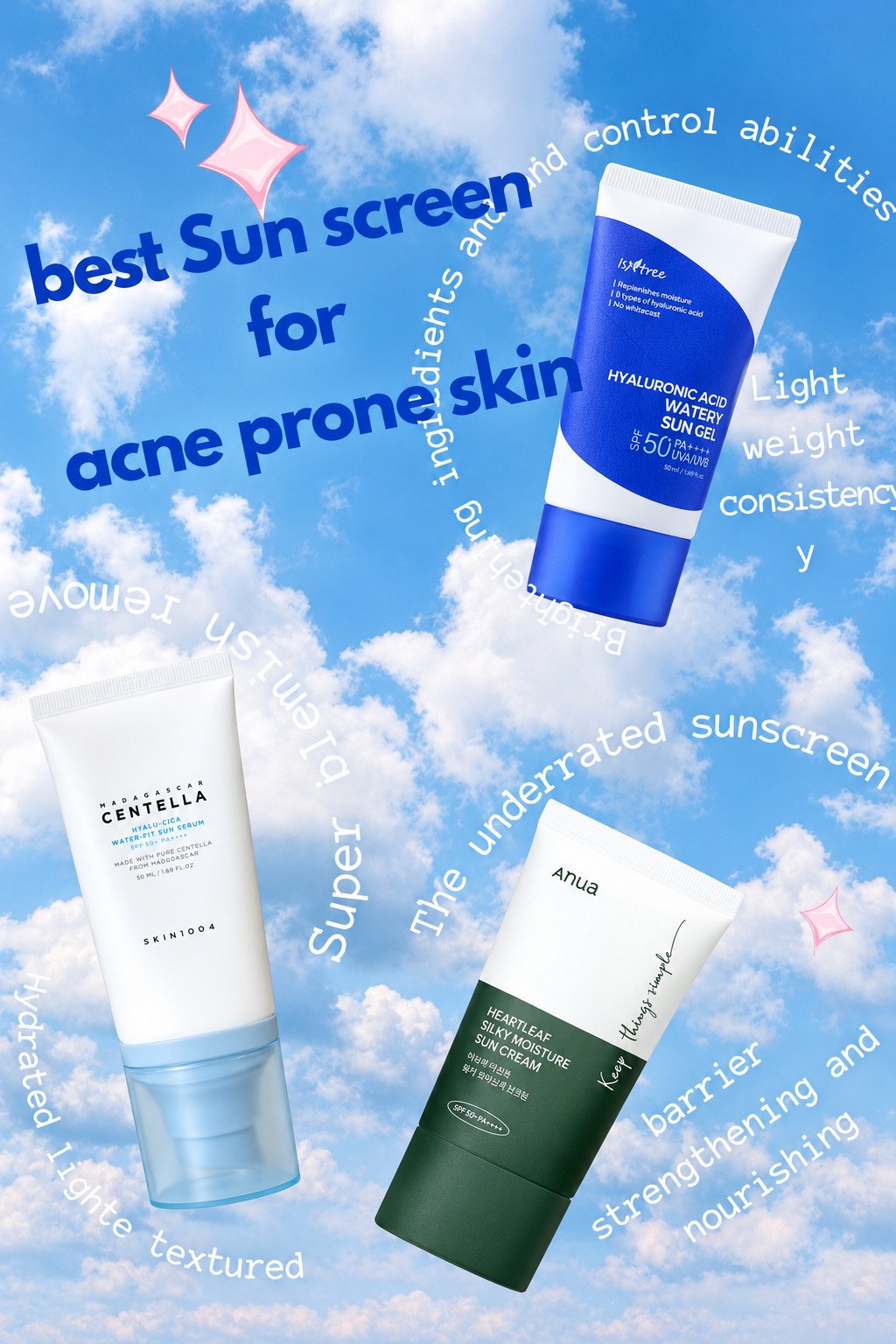
Finding a sunscreen that doesn’t feel like an oil slick or trigger breakouts can be a challenge, but modern formulas use lightweight filters and mattifying agents that absorb excess sebum while protecting your skin barrier.
What to Look For
- Non-comedogenic label: Formulated explicitly not to block pores.
- Gel, fluid, or water-based textures: Absorbs quickly without leaving a heavy, sticky film.
- Key ingredients: Niacinamide (reduces inflammation and oil), Silica/Perlite (absorbing shine), and Zinc Oxide (calming for active breakouts).
Top Tested Recommendations
| Product | Type | Key Features | Finish |
| La Roche-Posay Anthelios Clear Skin Dry Touch SPF 60 | Chemical | Contains Perlite and Silica to absorb oil even in heat and humidity. | Ultra-matte, touch-dry |
| EltaMD UV Clear Broad-Spectrum SPF 46 | Hybrid (Zinc + Octinoxate) | Packed with Niacinamide and Lactic Acid to soothe acne and clear pores. | Weightless, natural |
| Beauty of Joseon Relief Sun : Rice + Probiotics SPF50+ | Chemical | Lightweight organic filters with calming grain extracts; no white cast. | Dewy-matte (non-greasy) |
| Paula’s Choice Extra Care Non-Greasy Sunscreen SPF 50 | Chemical | Water-resistant, silky fluid loaded with antioxidants. | Smooth matte |
| Isntree Onion Newpair Sunscreen SPF 50+ PA++++ | Chemical | Formulated with red onion extract to fade post-acne marks and calm active spots. | Light gel lotion |
Application Tips for Acne-Prone Skin
- Skip heavy moisturizer: A hydrating sungel or fluid often provides enough moisture on its own for oily skin types.
- Use the two-finger rule: Apply two full lines of product on your index and middle fingers to ensure you reach the broad-spectrum protection promised on the label.
- Double cleanse at night: Always use a micellar water or oil cleanser first to fully break down water-resistant UV filters so they don’t clog pores overnight.